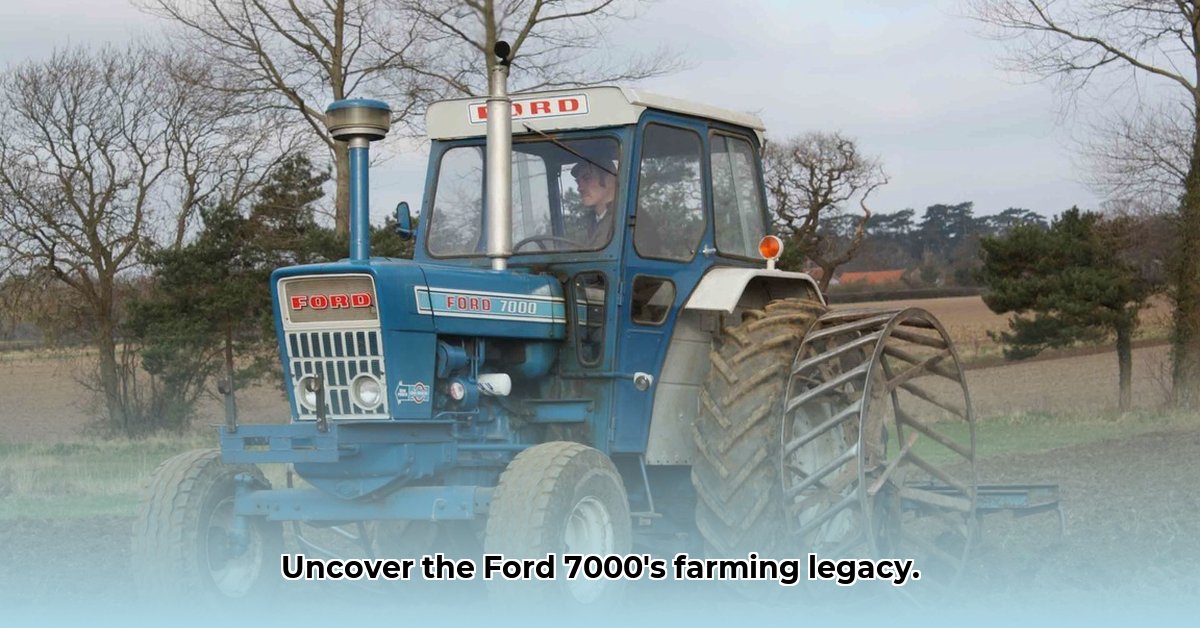
The Ford 7000 tractor, a stalwart of the early 1970s, wasn't just another piece of farm machinery; it represented a significant step forward in agricultural technology. This article delves into its specifications, historical context, and lasting impact on farming practices. We'll also explore how it compared to competitors and highlight areas for future research. For more Ford tractor information, see this helpful Ford tractor resource.
Under the Hood: Specs and Features of the Ford 7000
The Ford 7000 boasted a robust 4.2-liter Ford diesel engine, generating a respectable 93 horsepower (hp). This power, coupled with transmission options ranging from 8-speed to 16-speed, provided farmers with the flexibility needed for various tasks. Its hydraulic system, featuring a 6 gallons-per-minute (gpm) pump, powered a wide array of implements. Durability was a hallmark of its design, evidenced by the many still operational today. The tractor weighed between 6300 and 7225 pounds, depending on configuration and attachments—a substantial machine for its time. How much power, you might ask? Enough to handle the majority of farm duties with ease.
| Specification | Details |
|---|---|
| Engine | 4.2L Ford Diesel |
| Horsepower (Gross) | 93 hp |
| Transmission Options | 8-speed and 16-speed |
| Hydraulic Pump Flow | 6 gpm |
| Weight (Approximate) | 6300-7225 lbs |
A Tractor's Tale: Historical Context and Design Choices
The Ford 7000 emerged during a transformative era in agriculture. It marked a transition from simpler tractors to more powerful machines, offering improved performance while still being relatively accessible to farmers. Its open operator station – lacking the climate control and advanced safety features of modern cabs – reflected the cost and practicality considerations of the time. This design choice, while simpler than today's standards, reflected the priorities of the time. It was a durable, effective, and straightforward machine that served countless farmers reliably.
The Competition: How the Ford 7000 Measured Up
John Deere and Massey Ferguson were key competitors in the same class. While precise sales data for comparing the Ford 7000's market share to its rivals remains elusive—further research into historical sales figures from dealerships and industry publications is needed— its reputation for robustness, the trusted Ford name, and reliable power likely contributed significantly to its success. One can only speculate on the nuances of direct comparison without access to further documentation.
A Lasting Impression: Long-Term Impact and Legacy
The Ford 7000's influence extends beyond its initial production run (1971-1975). Its design elements notably influenced subsequent Ford tractor models. Its remarkable durability is evidenced by the many still in use today, transforming some of these workhorses into treasured collector’s items. This enduring legacy illustrates not just its market success, but also its pivotal role in shaping the agricultural landscape of its time.
Still More to Learn: Directions for Future Research
Several areas warrant further investigation. Examining the agricultural regulatory environment of the early 1970s, particularly safety and emissions regulations, would enrich our understanding of the tractor's design context. A comparative analysis of its maintenance and operational costs against contemporaries could provide crucial economic insights. Exploring these areas would further illuminate the Ford 7000's position in the evolution of agricultural machinery.
Three Pivotal Points about the Ford 7000
- Durable Design: Its robust construction ensured longevity, with many units still functioning decades later.
- Reliable Power: The 93hp engine provided sufficient power for a range of agricultural tasks.
- Transitional Technology: It represented a crucial stepping stone in agricultural mechanization, bridging older, simpler designs with more advanced models.
Comparing the Ford 7000 to Competitors: A Methodological Approach
Direct comparison with competitors like the County 754 highlights key differences. While the County offered 4-wheel drive for superior traction, it had lower horsepower (approximately 74hp) and potentially higher maintenance costs. Weight differences also impacted soil compaction. A thorough comparison must consider these factors:
- Engine Power and Torque: Analyze power output across different engine speeds for a complete picture rather than just horsepower alone.
- Drive System: The choice between 2WD and 4WD significantly impacts traction and terrain suitability.
- Weight and Dimensions: Weight affects stability and soil compaction.
- Transmission: The number and ratios of gears influence operational efficiency.
- Hydraulics: Pump flow rate and pressure affect implement compatibility.
- PTO: Horsepower, speed options, and durability are crucial for powering attachments.
Data gaps hinder direct comparison. Accessing original brochures, owner’s manuals, and engaging with tractor enthusiasts and online forums are critical steps to overcome these limitations. This research will allow a truly informed comparison between the Ford 7000 and its competitors from the era.